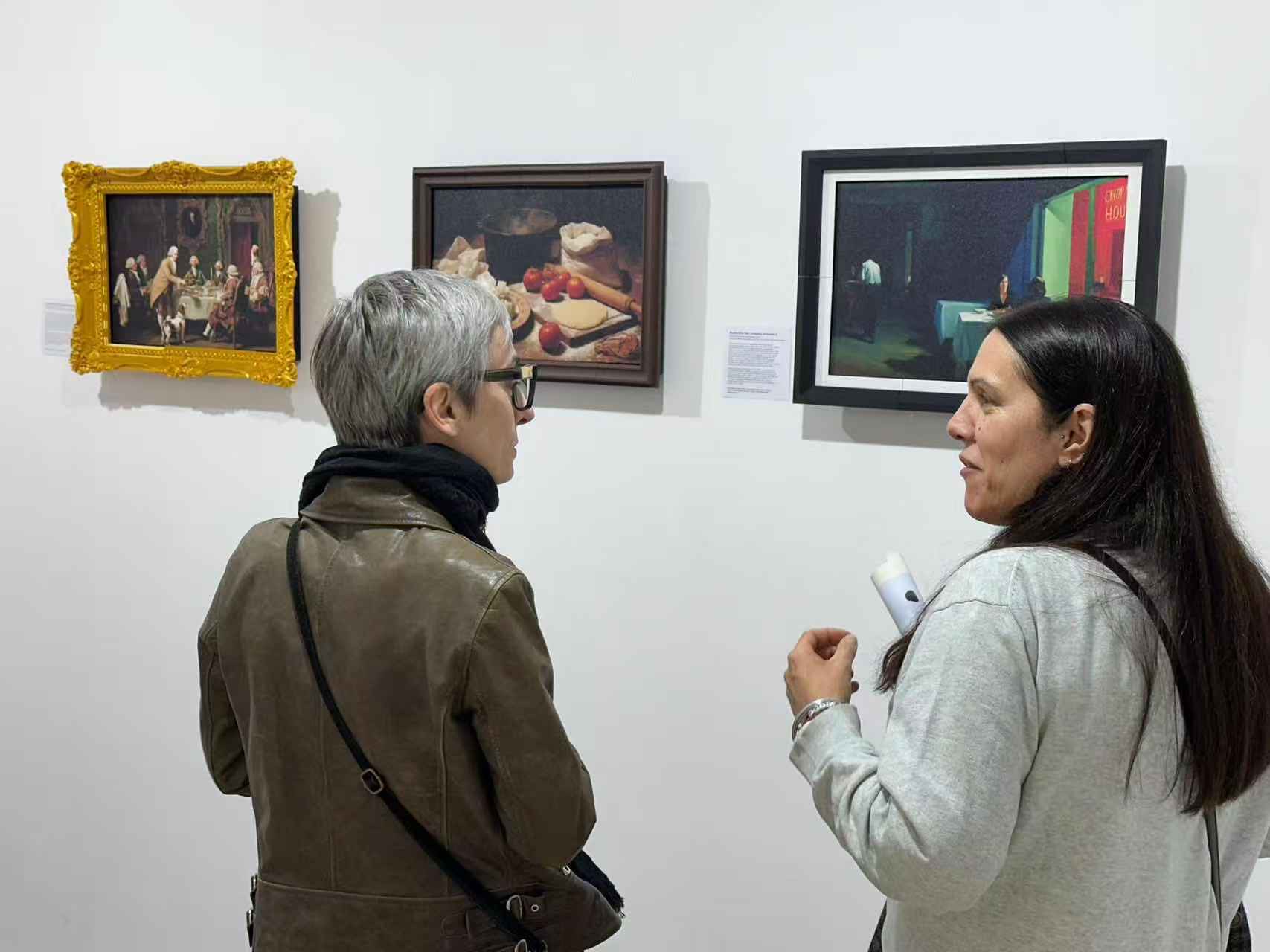
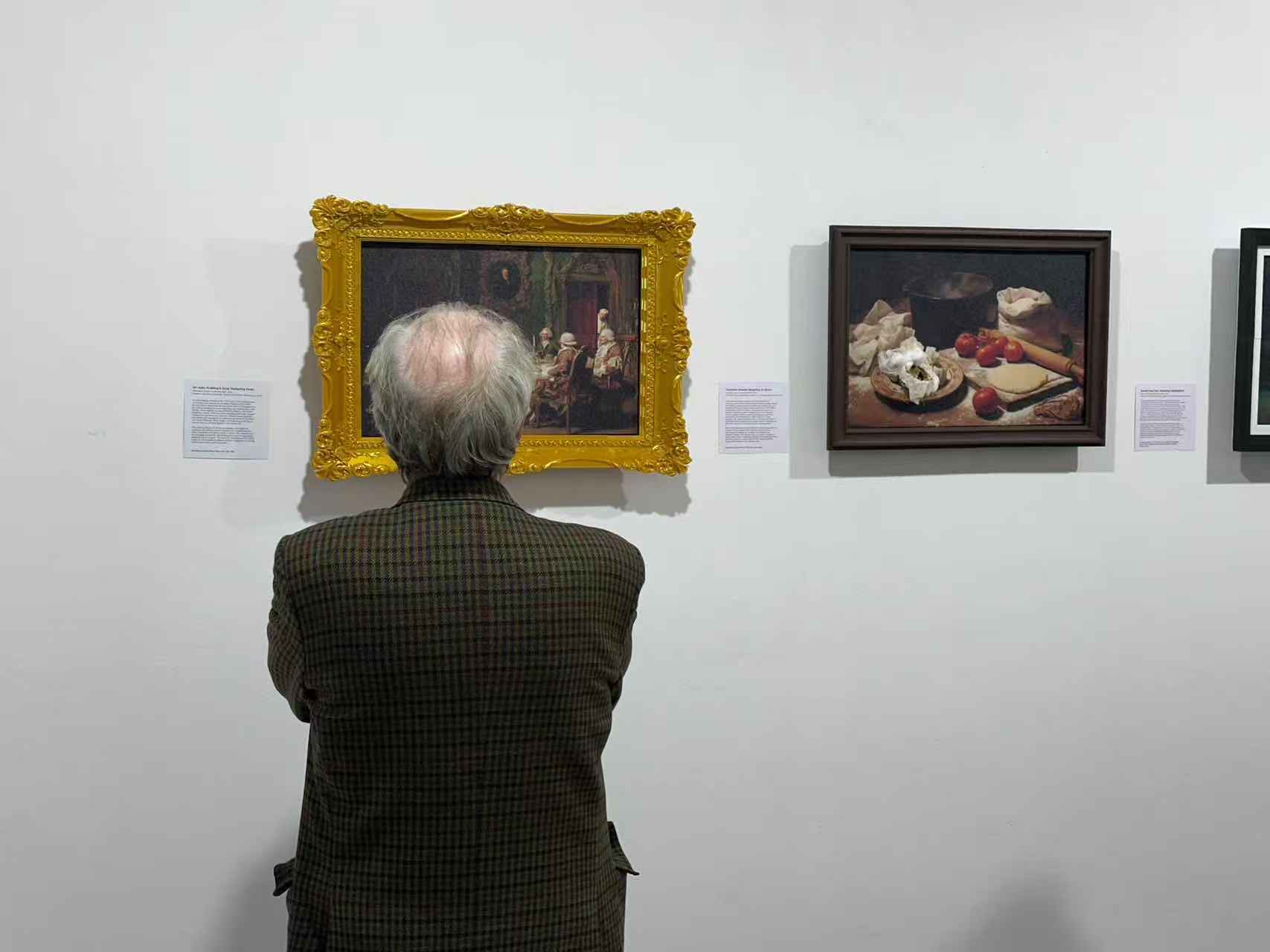
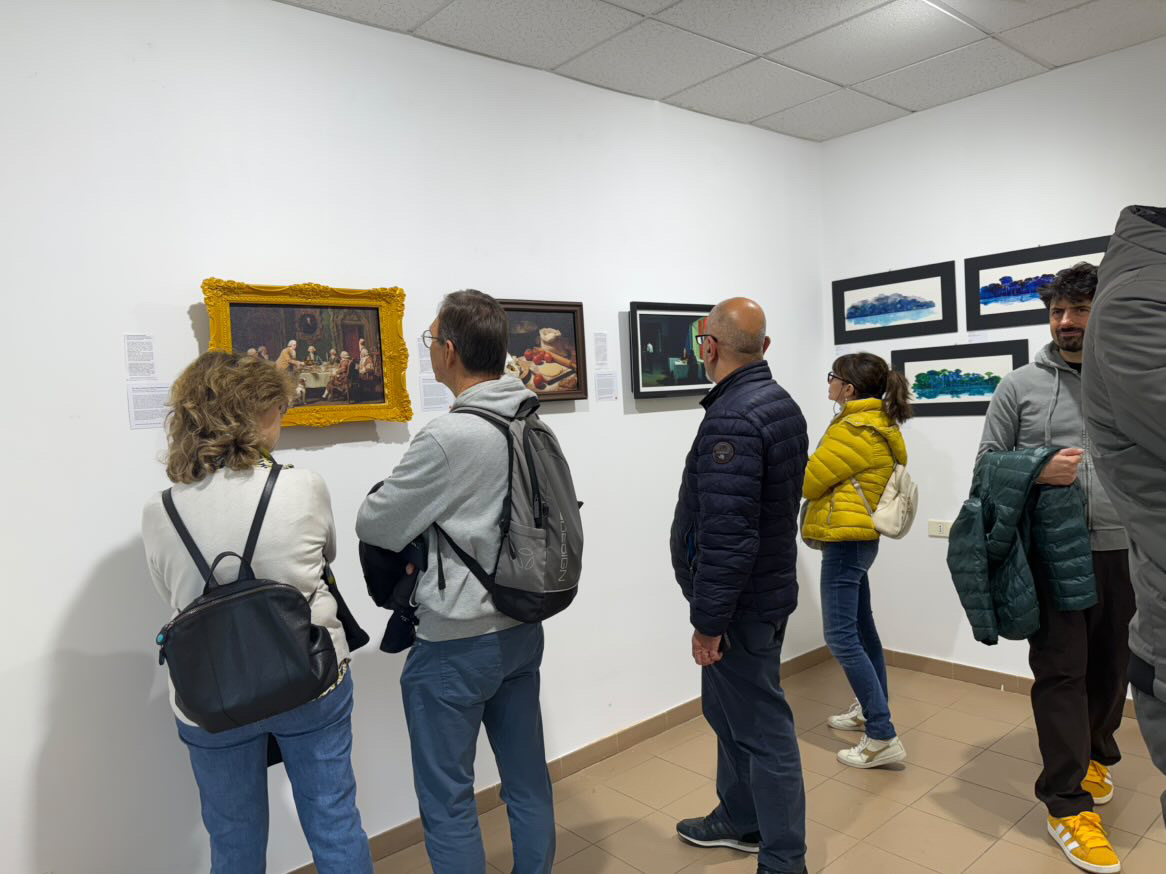
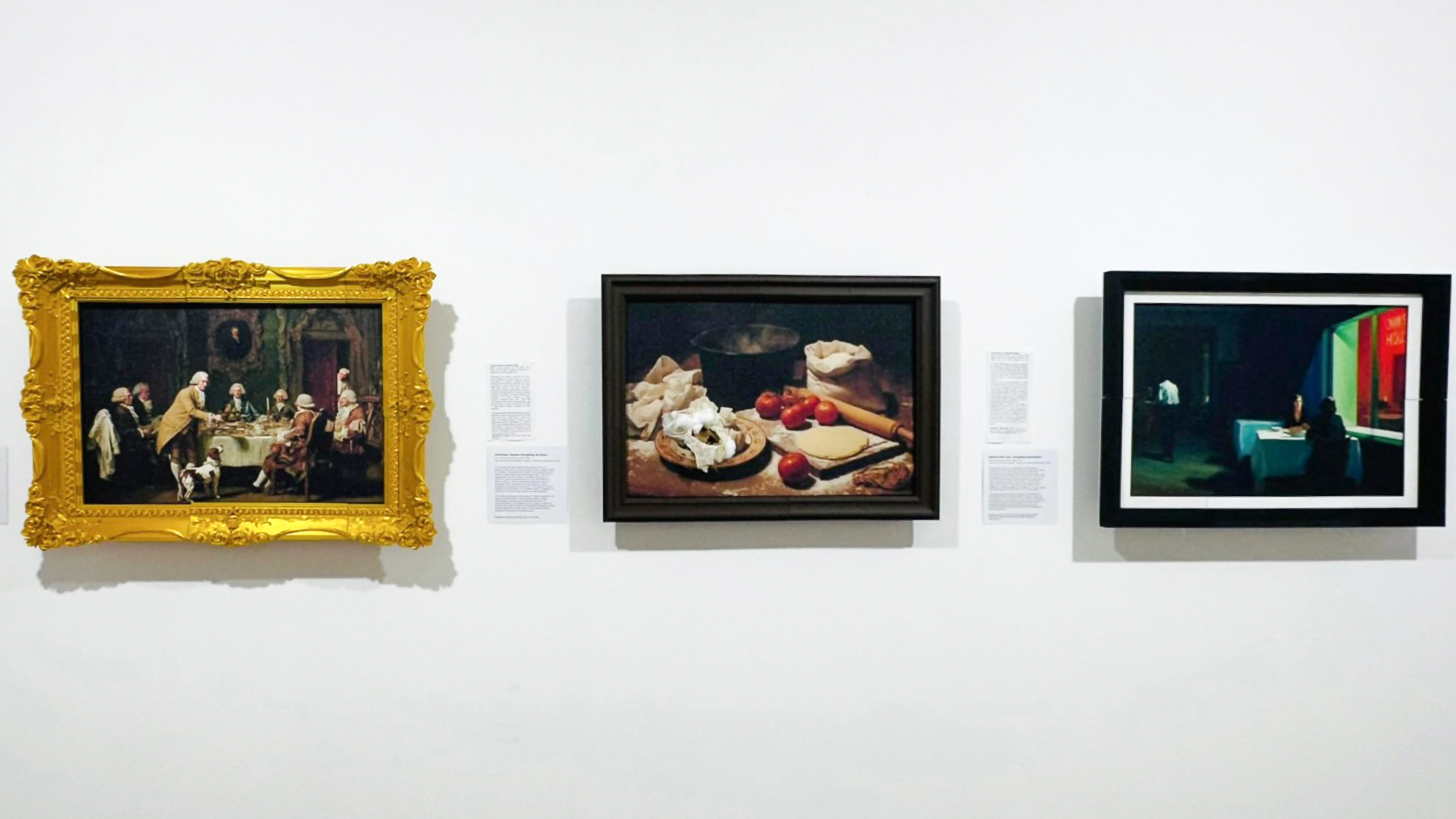
Each panel is rooted in primary materials such as cookbooks, political pamphlets, and cultural texts, and rendered using AI-generated imagery, digital fabrication, and preserved food elements.The work also reflects my exploration on the role of generative AI as an averaging tool: one that can both flatten cultural specificity and paradoxically extend access to archival knowledge in a time of hyper-speed information consumption. The panels appear in chronological order, tracing the etymological evolution of the word “dumpling” and the shifting meanings it has carried across time and place.
As an extension from the Alien Archive series, Three Feasts adopts the visual codes of fine art to elevate overlooked stories of migration, adaptation, and identity. Its quasi-museum presentation—yet designed for an art show—invites viewers to consider what becomes part of the archive, the frame, or the cultural imagination.
Acquired by Private Collector
Sir John Pudding’s State Dumpling Feast
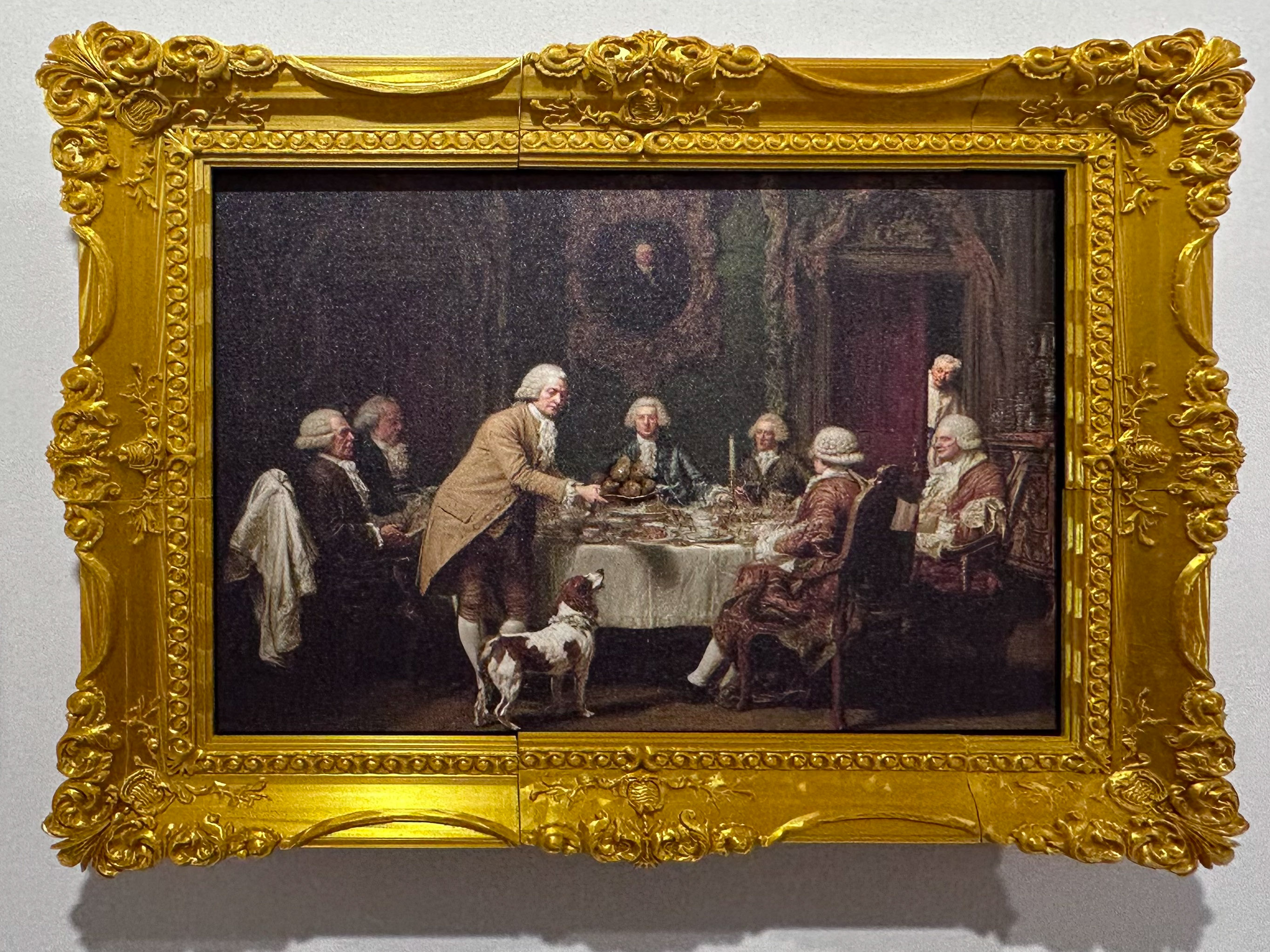
The first panel mimics an 18th-century British conversation piece to depict the satirical politics of pudding-making in Georgian England.
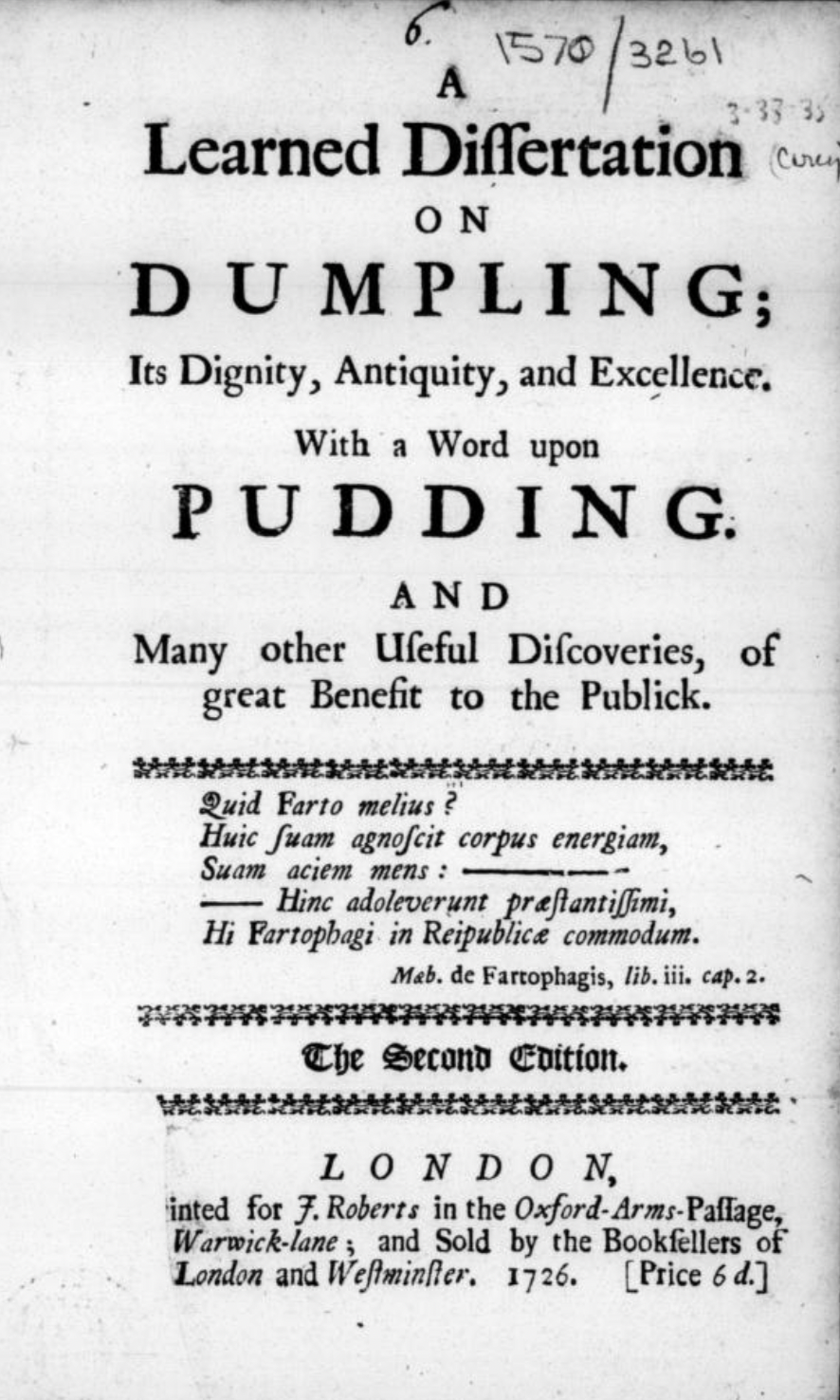
Sir John Pudding, the central figure in the 1726 satire A Learned Dissertation on Dumpling, is a stand-in for Sir Robert Walpole (1676–1745), Britain’s first de facto Prime Minister. In the tale, Sir John rises to power by broiling dumplings to suit King John, who detests them cold. For this culinary feat, he is knighted and granted courtly influence. His Sunday breakfasts—where courtiers were served dumplings and wine — became symbols of royal favour. But resentment brewed among excluded churchmen, representing Walpole’s Tory opponents, who denounced the gatherings as irreverent “sacrifices” and “butter libations.” Their attacks eventually swayed the king to cast Sir John out—mirroring Walpole’s own political fall.
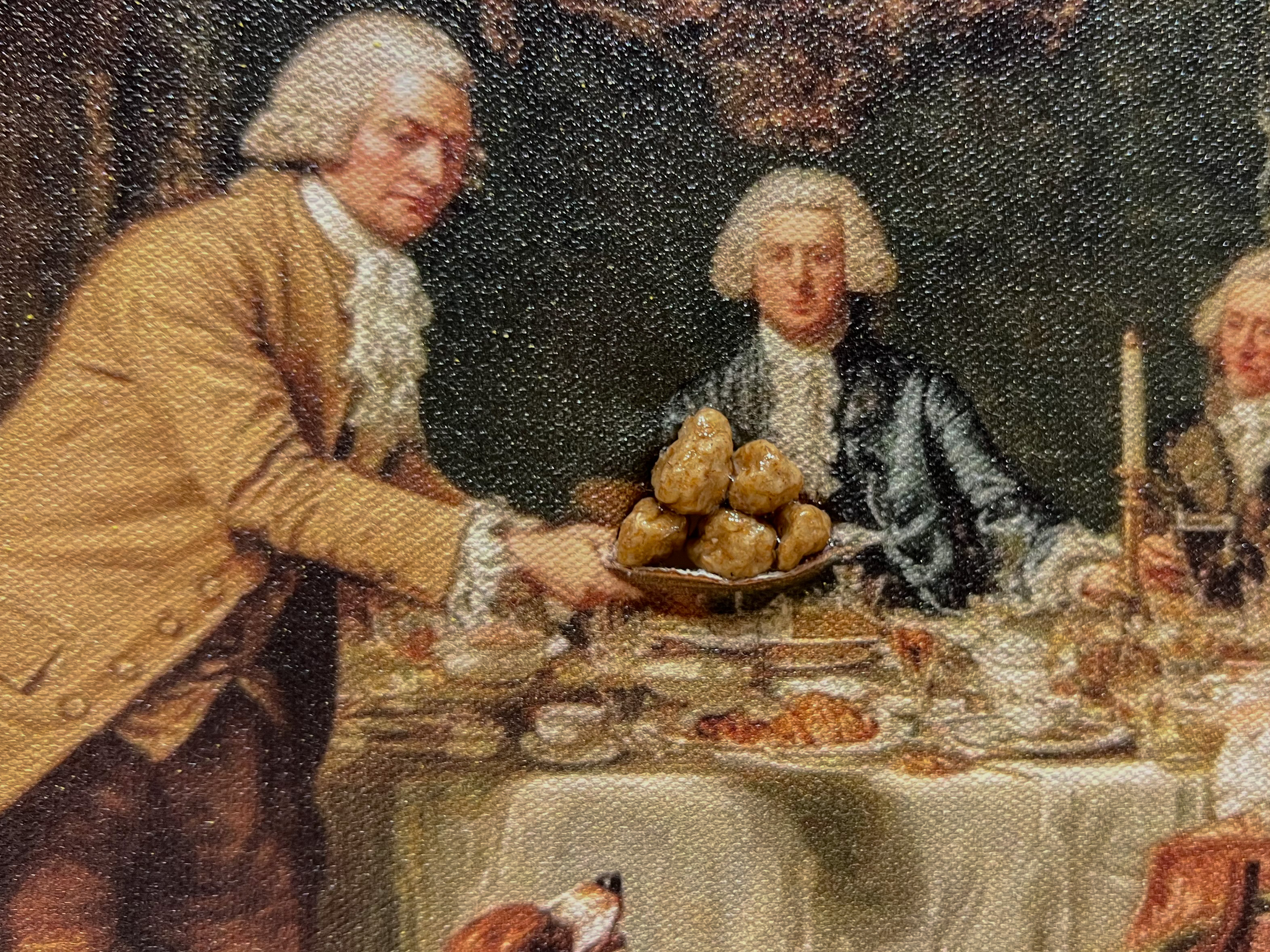
This image captures one of those ceremonial breakfasts, with dumplings acting as visual proxies for political reward. The courtiers sits around King John, while disgruntled churchmen lurks in the background, preparing to disrupt the feast. By staging the court as a theatre of appetite and advantage, the image satirizes the culture of patronage that upheld Walpole’s power. The original pamphlet was so popular that a companion volume, The Key to the Dissertation, appeared the following year to decode its many-layered allegory. Together, they cemented the dumpling in Britain’s political imagination as a lasting symbol of corruption, favouritism, and the machinery of state.
Dumpling (18th century):
- n. blobs of dough that may or may not have stuffing "dumped" in water.
- contains: Flour, Yeast, Salt, Egg, Milk
American Tomata Dumpling At Dawn
In 19th-century Europe, tomatoes were still believed to be
poisonous: their acidity reacted with pewter plates (common among the wealthy) causing illness and rendered them inedible. But in the relatively young United States, Sarah J Hale (1788–1879), a leading editor and cultural figure, reimagined the tomato as a
symbol of American abundance instead. In her 1858 edition of
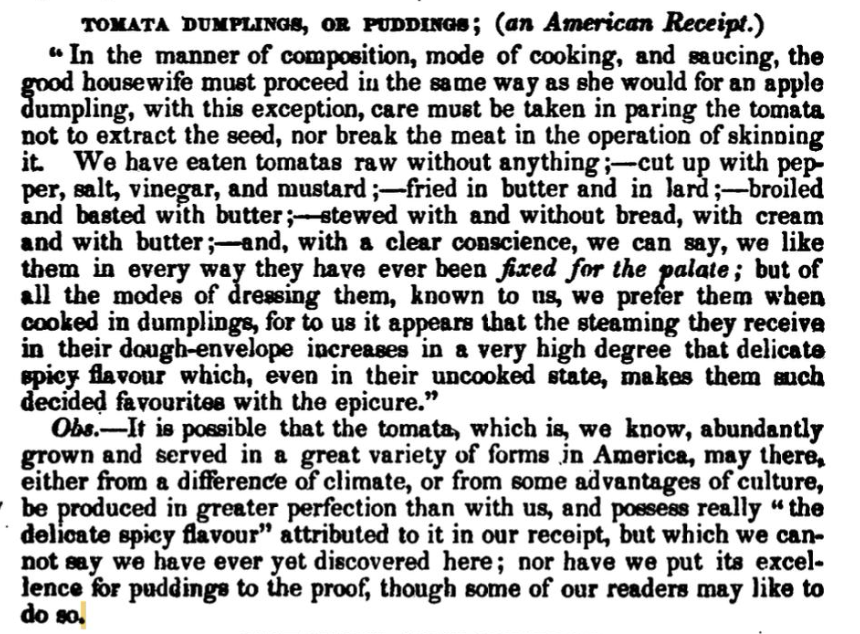
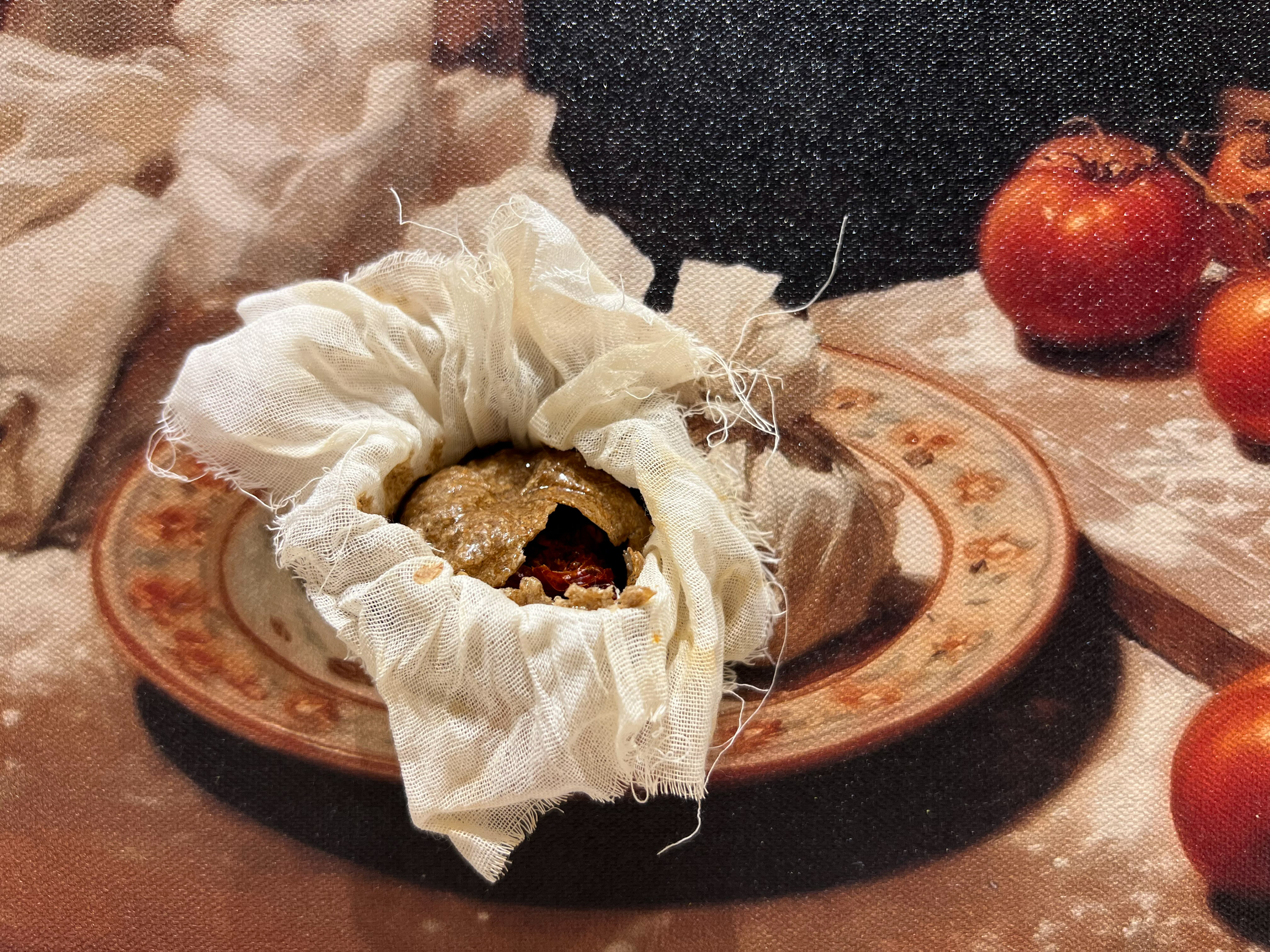
Modern Cookery, a British cookbook she adapted for the American families, Hale introduced her original recipe for "Tomata dumpling". By wrapping this fruit, native to the American land but unfamiliar to the Europeans, in the familiar form of a dumpling, she offered her “best way to enjoy tomatas; an American Recipe”.
This early 19th century American still life styled piece commemorates that moment of culinary adaptation and cultural invention at dawn. Ripe tomatoes, rolled-out dough, cloth-wrapped dumplings are arranged with deliberate but intentional balance. One dumpling was just opened, revealing the tomato inside. Mostly credited for nationalizing Thanksgiving, Hale’s dumpling marked an a similar effort to build national tradition, shaping what belonged at the American table.

Dumpling (19th century):
- n. an inclusive, nostalgic way of making wheat-based dishes, may be baked or boiled, ready to be adapted to any stuffing of your choice
- contains: Flour, Water, Suet, Salt, Tomato
Bowtie Wun Tun: Dumpling Reclassified
Between 1882 and 1943, U.S. immigration laws barred Chinese immigrants from seeking legal status. Those who remained had to spread across small towns in search of opportunity, often opening small restaurants that served adapted Chinese food to American families. These eateries soon became a go-to dinner option when no one wanted to cook.
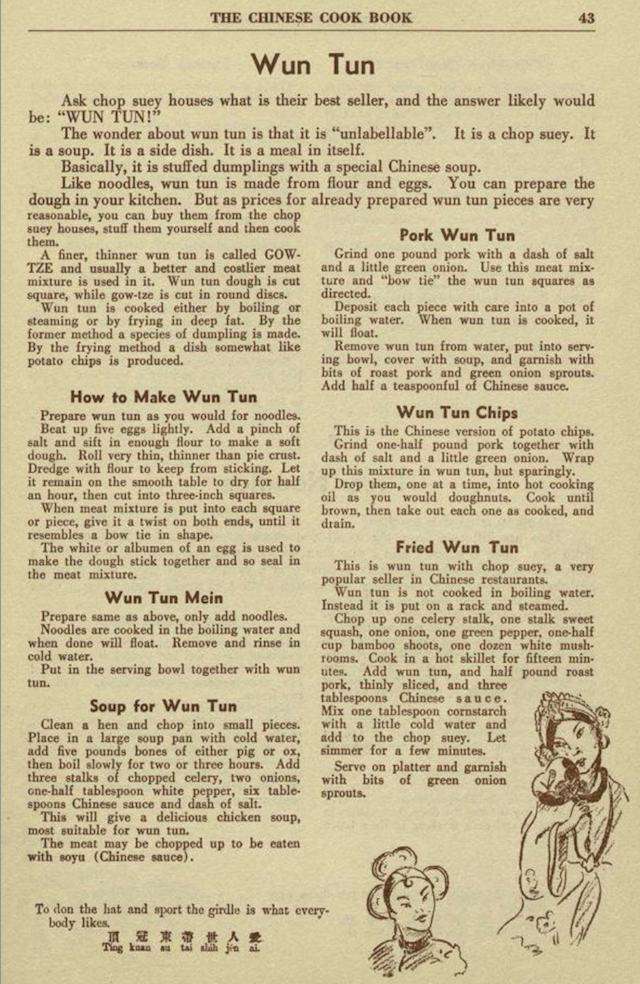
By the 1920s, Chinese American food and specialty restaurants, named chop suey houses, had become a cultural staple. Cookbooks like The Chinese Cookbook by M. Sing Au (1936) reflected this shift, using the
familiar word “dumpling” to make Chinese recipe “wun tun” more palatable. Once strictly an English term, “dumpling” now carried a Chinese association, helping Chinese food find a place on American tables.
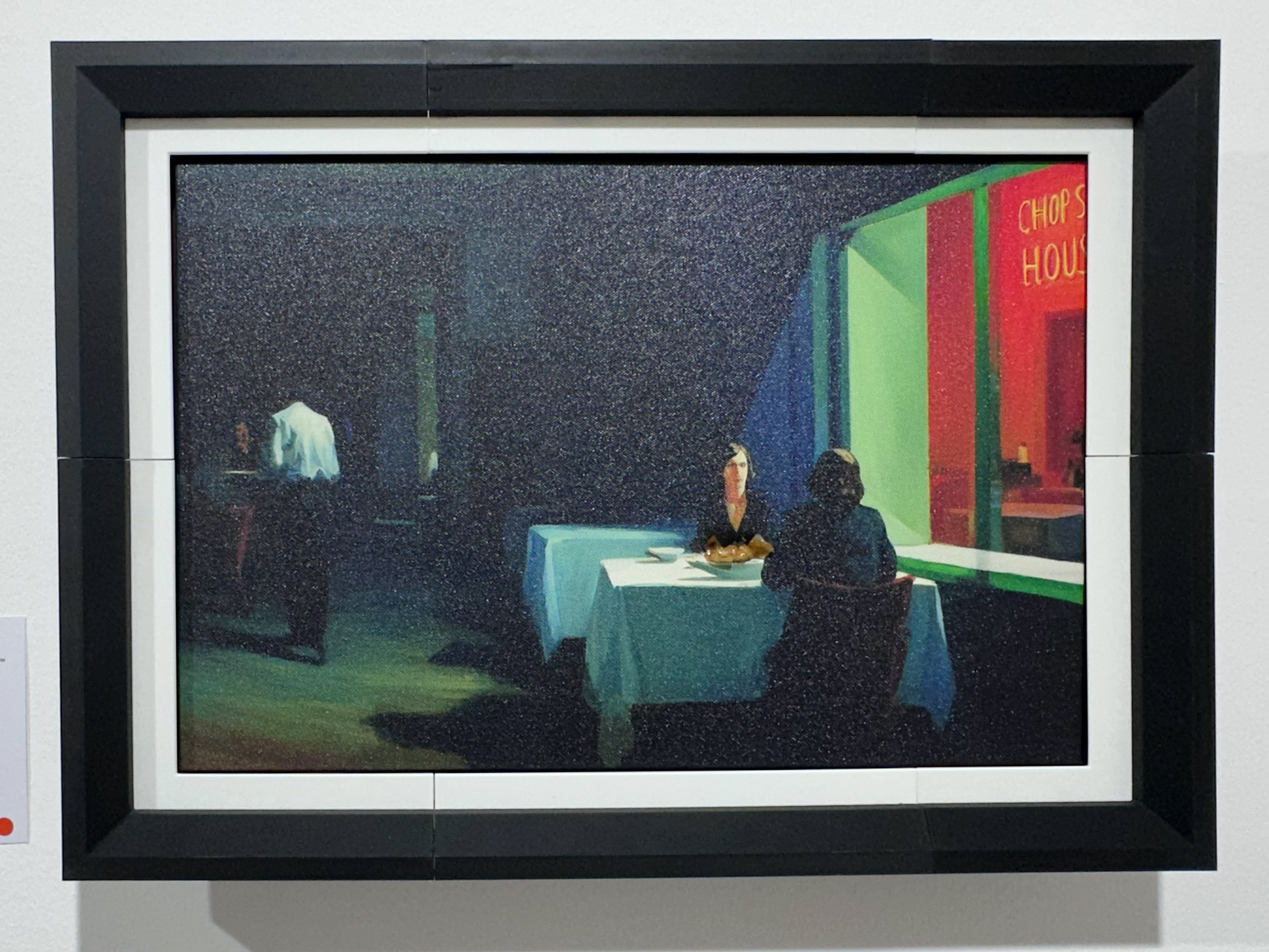
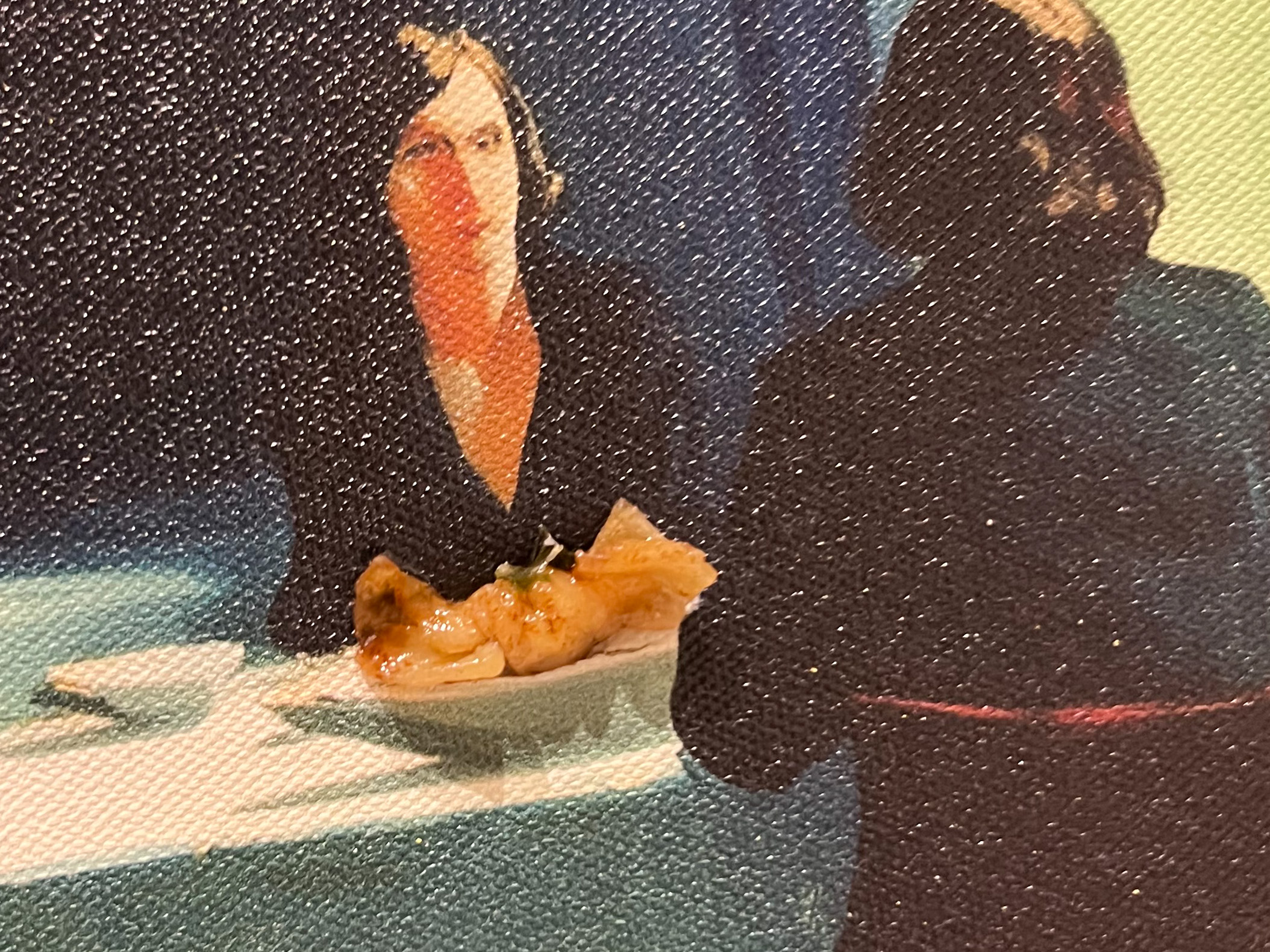
This image captures that moment of adaptation and acceptance. A bowtie-shaped wuntun—“Chinese dumpling”—is plated in front of the
Caucasian diners in a Chinatown spot. A Chinese waiter is walk away to serve another table, his face obscured. Outside, a glowing neon sign reads Chop Suey, illuminating something exciting and “civilized”. These immagrant’s dumplings would quietly win popularity, eventually reclassifying both the food and the meaning of the word “dumpling” in the english language till this day.
Dumpling (20th century):
- n. euphemism for bow-tie shaped, stuffed, wheat-based foods, often served in east Asian eateries
- contains: Flour, Salt, Water, Pork, Scallion, Chinese Sauce, etc